
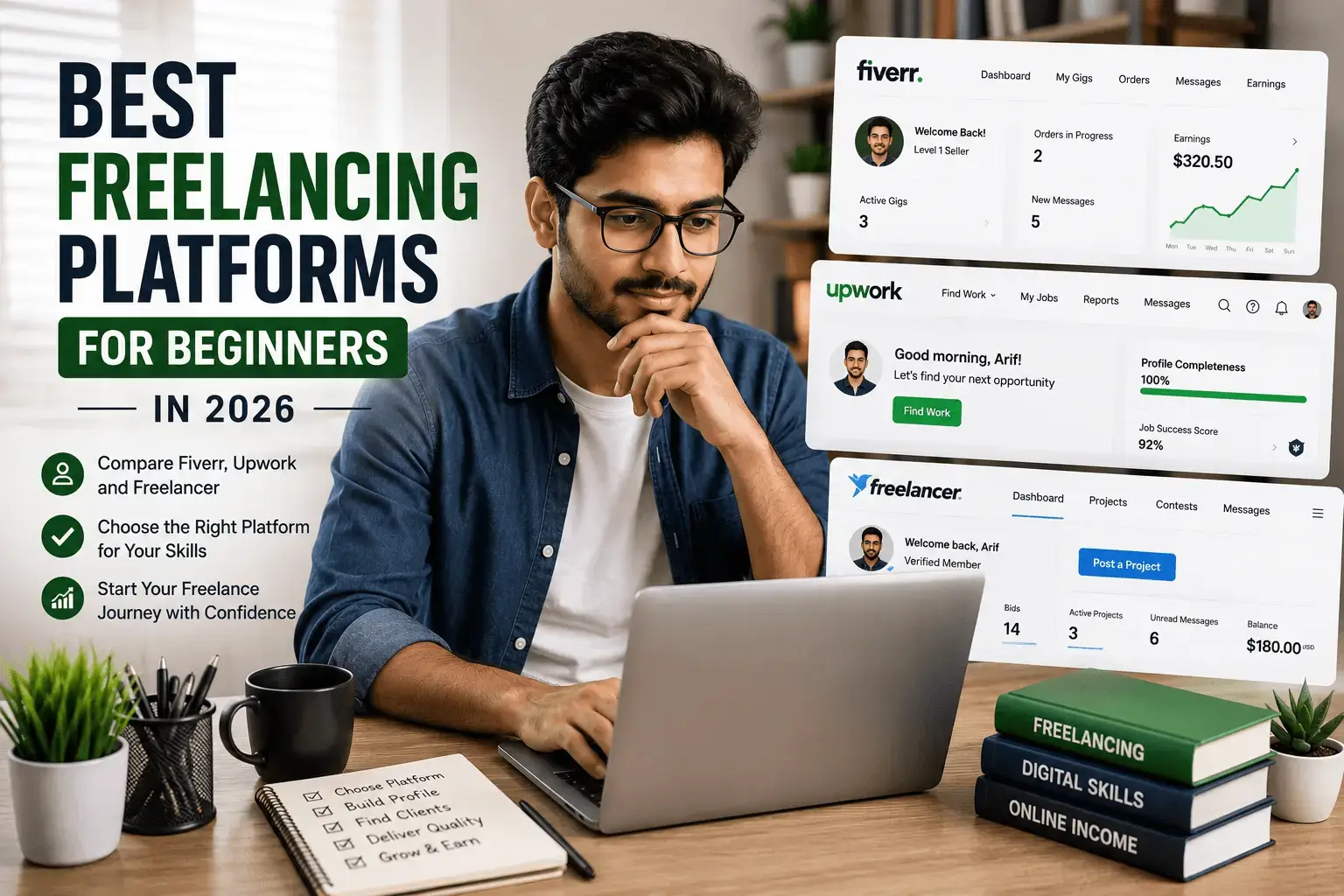
Best Freelancing Platforms for Beginners (2026 Guide)
Last Updated: July 2026
Reading Time: 12–15 minutes
Introduction
Finding the best freelancing platforms for beginners can feel overwhelming when every website claims to be the easiest place to earn online. The truth is that no platform guarantees success. The best choice depends on your skills, goals, and how you prefer to find clients.
Many beginners create accounts on every platform they can find. A better strategy is to master one platform before expanding.
This guide compares the best freelancing platforms for beginners, explains how each one works, and helps you choose the right platform based on your skills and goals. The recommendations in this guide are based on practical observations of how major freelancing platforms work, combined with common challenges beginners face when building their first online income.
Why Freelancing Is a Great Way to Start
Freelancing lets you build practical experience, work with clients worldwide, and grow at your own pace. You don’t need years of experience to begin—just a skill that solves a real problem. If you are entirely new to this space, check out our comprehensive guide on What Is Digital Marketing? or read our step-by-step roadmap on How to Start Digital Marketing to choose your niche.
Fiverr: A Strong Starting Point
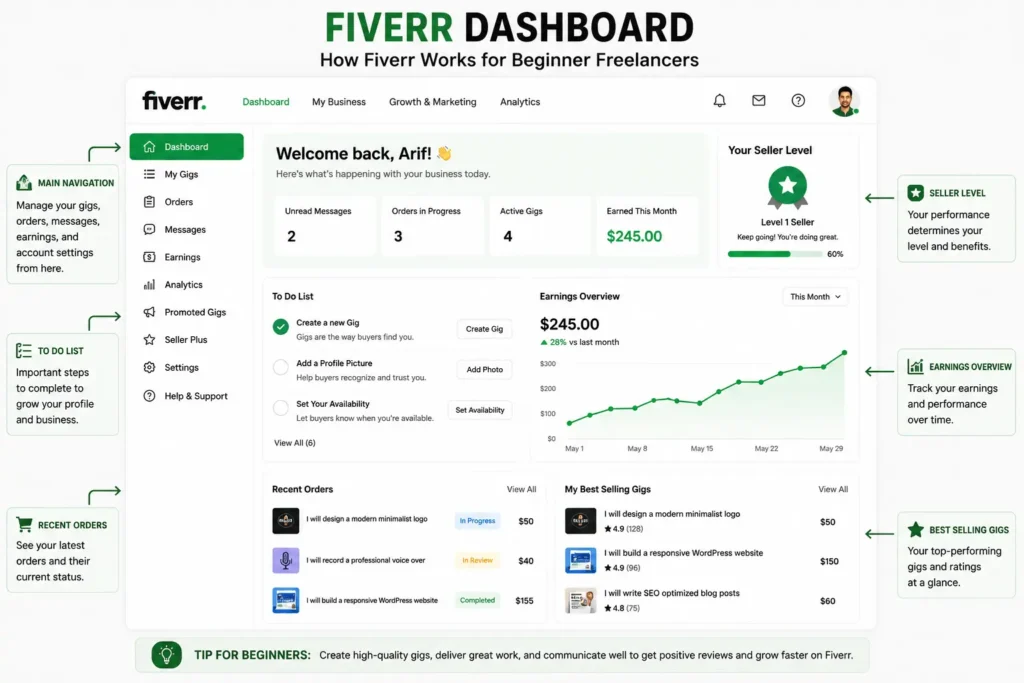
Fiverr allows you to create service listings, known as gigs, that clients can discover through search. This makes it attractive for beginners who prefer being found rather than sending proposals every day. To fast-track your success, see our exact strategy on How to Get Your First Client on Fiverr.
Focus on a clear niche, write an original gig description, use professional visuals, and keep improving your profile as you gain reviews.
Upwork: Best for Long-Term Freelance Growth
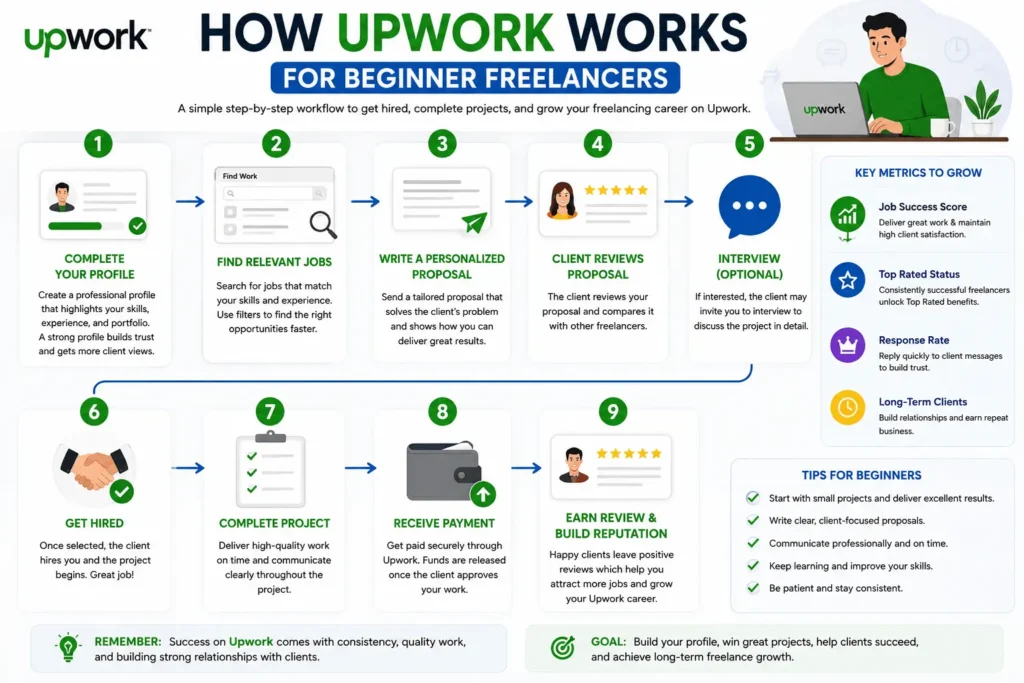
Upwork is built around proposals rather than service listings. Create a strong profile, apply for projects that match your skills, and write personalized proposals. Long-term clients and higher-value projects make it attractive once you’ve built credibility.
Freelancer.com: Build Experience Across Many Categories
Freelancer.com offers projects in writing, design, development, marketing, and more. Apply selectively instead of bidding on everything. Strong communication and relevant samples help you stand out.
One pattern I’ve consistently noticed is that beginners who commit to learning one platform almost always progress faster than those constantly switching between marketplaces.
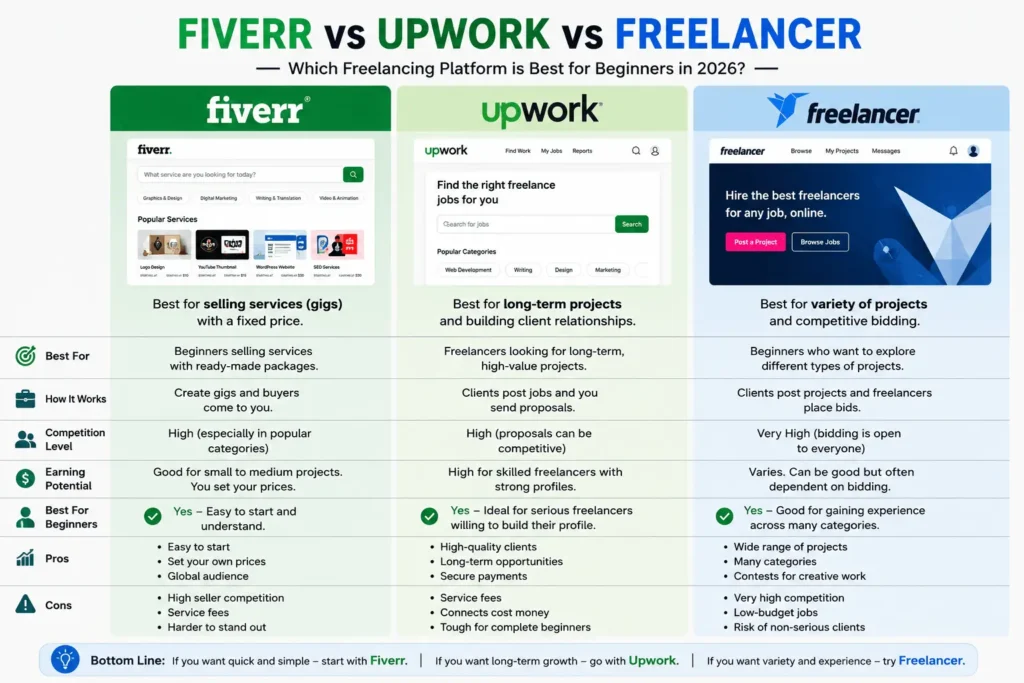
Fiverr vs Upwork vs Freelancer: Complete Comparison
| Feature | Fiverr | Upwork | Freelancer |
| How clients are found | Clients find gigs | You send proposals | You bid on projects |
| Best for | Packaged services | Long-term work | Varied opportunities |
| Difficulty | Easy | Medium | Medium |
How to Choose the Right Platform
Choose Fiverr if you prefer clients discovering your services. Choose Upwork if you enjoy writing proposals and building ongoing relationships. Choose Freelancer if you want to explore many project categories while building experience.
Common Beginner Mistakes
Applying for every project.
Using copied proposals.
Offering too many unrelated services.
Giving up after a few rejections.
💡
DGSoftHub Pro Tip
Most beginners spend far too much time comparing freelancing platforms and not enough time improving their profiles. In practice, the platform matters less than the effort you put into learning it. A professional profile, thoughtful communication, and consistently delivering quality work will usually outperform having accounts on multiple marketplaces with incomplete profiles. Focus on mastering one platform first, then expand once you’ve built confidence and positive reviews.
How to Get Your First Freelance Client Faster
Landing your first client often feels like the hardest part of freelancing. Once you’ve completed a few successful projects and earned positive reviews, finding future work usually becomes much easier.
Build a profile that inspires confidence. Use a professional photo, write a clear summary, focus on one or two services, and add portfolio samples—even personal projects can demonstrate your ability.
Most beginners try to offer everything. Instead, specialize first. Clients are more likely to hire someone who clearly solves one problem well.
Communication matters as much as technical skill. Reply promptly, ask questions, set realistic expectations, and keep clients updated throughout the project.
Keep learning while you earn. Spend time each week improving your skills so you can gradually increase your rates and attract better clients.
Freelancing Success Checklist for Beginners
Complete your profile with a professional photo and clear headline.
Upload relevant portfolio samples.
Personalize every proposal.
Deliver work on time.
Ask satisfied clients for reviews.
Quick Comparison Table
At a glance, here’s how Fiverr, Upwork, and Freelancer compare across the factors that matter most to beginners. While each platform has its strengths, the best choice depends on your skills, preferred working style, and long-term goals.
| Feature | Fiverr | Upwork | Freelancer |
|---|---|---|---|
| Client Acquisition | Clients find your gigs | You submit proposals to clients | You bid on posted projects |
| Approval Needed | No | Basic profile review | No |
| Service Fees | Around 20% on most orders | Sliding service fee based on client billing | Project fee or membership plans |
| Best For | Beginners, creative services, fixed-price packages | Professionals seeking long-term clients | Freelancers exploring a wide range of projects |
| Learning Curve | Easy | Moderate | Moderate |
| Long-Term Potential | ★★★★☆ | ★★★★★ | ★★★★☆ |
| Beginner Difficulty | ⭐⭐☆☆☆ (Easy) | ⭐⭐⭐⭐☆ (More Challenging) | ⭐⭐⭐☆☆ (Moderate) |
| Ideal Services | Writing, graphic design, video editing, AI content | Web development, SEO, marketing, consulting | Writing, design, programming, data entry, virtual assistance |
| Best If You Want To… | Build a portfolio without writing proposals | Develop long-term client relationships | Gain experience across different project categories |
Avoid Freelance Scams: Protect Your Time and Money
One of the advantages of using established freelancing platforms is that they provide payment protection and dispute resolution. Even so, scams still exist, especially for beginners who are eager to land their first client.
Understanding the warning signs can save you time, money, and frustration.
Never Accept Work Outside the Platform Too Early
A common scam starts with a client asking you to continue the conversation on WhatsApp, Telegram, or email before hiring you.
While some legitimate clients eventually communicate outside the platform, moving too early removes the protection offered by Fiverr, Upwork, or Freelancer.
Until you’ve built trust, keep communication and payments within the platform.
Crucial Rule: Protect Your Work
If the test creates real value for the client, you should expect to be paid.
A reasonable skills assessment is one thing. An entire article, logo, website page, or marketing campaign completed for free is another. Walk away if they refuse a funded milestone.
Never Pay to Get a Job
Legitimate clients pay freelancers.
Freelancers should never pay clients to unlock projects, receive contracts, or verify employment.
If someone asks for money before offering work, walk away.
Red Flag Warning
Never Pay to Get a Job: Legitimate clients pay freelancers. Freelancers should never pay clients to unlock projects, receive contracts, or verify employment. If someone asks for money before offering work, walk away instantly.
Watch for Unrealistic Offers
Imagine seeing a job that says:
“Earn $2,000 this week with no experience.”
That should immediately raise questions.
Professional clients usually explain:
- the project
- the required skills
- the timeline
- the budget
Scammers often focus only on unrealistic earnings.
Protect Your Personal Information
Never share:
- Bank login details
- National identity documents unless required by the platform
- Passwords
- Verification codes
- Personal financial information
Your freelancing profile should build trust—not expose your private information.
30-Day Beginner Freelancing Roadmap
Many beginners feel overwhelmed because they try to do everything at once.
Instead, focus on steady progress.
Week 1 — Build Your Foundation
Your goal this week is preparation.
- Choose one freelancing platform.
- Decide which service you’ll offer.
- Create a professional profile.
- Upload a friendly, professional profile photo.
- Write a clear description of your services.
Don’t worry about perfection.
Getting started matters more.
Week 2 — Create Your Portfolio
Clients need proof that you can do the work.
Even without paid experience, you can create: you can create sample blog posts. Learn the exact process in our guide on How to Write SEO-Friendly Blog Posts, and make sure you target the right search terms using our Low-Competition Keyword Research Guide
- Sample blog posts
- Logo designs
- Social media graphics
- SEO audits
- WordPress websites
- AI-assisted content examples
Quality samples often matter more than long resumes.
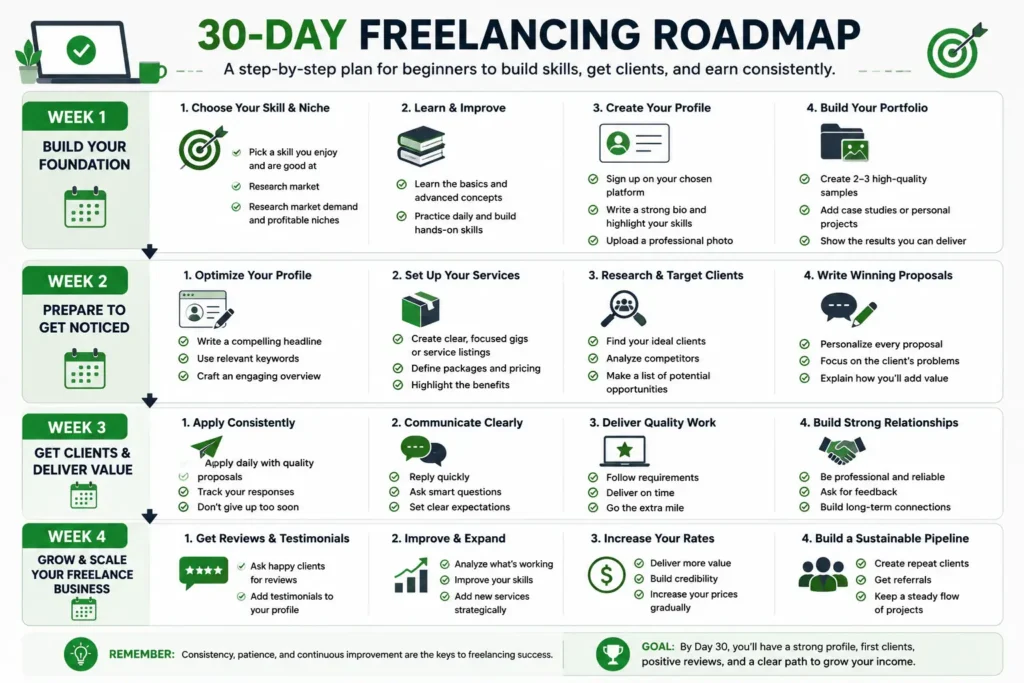
Week 3 — Start Finding Clients
This is where many beginners hesitate.
Don’t wait until everything feels perfect.
Instead:
- Send a few personalized proposals every day.
- Improve one part of your profile each week.
- Learn from every response.
Consistency beats intensity.
Week 4 — Deliver Great Work
Landing a client is only the beginning.
Focus on:
- Meeting deadlines
- Clear communication
- High-quality work
- Asking for honest feedback
- Requesting reviews after successful projects
Positive reviews become one of your strongest marketing tools.
Don’t worry if you don’t land your first client within 30 days. The roadmap is designed to build momentum. For many beginners, consistency over the next few months is what leads to lasting success.
Expert Tips from DGSoftHub
Over the years, we’ve noticed a pattern among beginners who eventually succeed.
They don’t chase every opportunity.
They master one skill, improve one profile, and stay consistent long enough to build momentum.
At DGSoftHub, we encourage beginners to think long term. Freelancing isn’t just about making your first dollar online—it’s about building skills that continue creating opportunities for years to come.
Small improvements made consistently often produce far better results than constantly jumping between platforms, courses, and strategies.
Bonus: Freelancing Platform Comparison Checklist
If you’re still unsure which platform to start with, use this quick checklist. It isn’t about finding the “perfect” platform—it’s about choosing the one that best matches your current skills and working style.
| Question | Fiverr | Upwork | Freelancer |
| I want clients to find me instead of sending proposals. | ✅ | ❌ | ❌ |
| I’m looking for long-term client relationships. | ⚪ | ✅ | ⚪ |
| I’m comfortable writing personalized proposals. | ❌ | ✅ | ✅ |
| I offer fixed-price services like logo design, writing, or video editing. | ✅ | ⚪ | ⚪ |
| I want to explore a wide range of project categories. | ⚪ | ⚪ | ✅ |
| I’m completely new to freelancing. | ✅ | ✅ | ✅ |
If most of your answers fall under one platform, that’s probably the best place to begin. Instead of creating accounts everywhere, spend the next 60–90 days learning how one platform works and improving your profile. Consistency usually produces better results than constantly switching between marketplaces.
Which Freelancing Platform Should You Choose?
Use this simple decision guide if you’re still deciding where to begin.
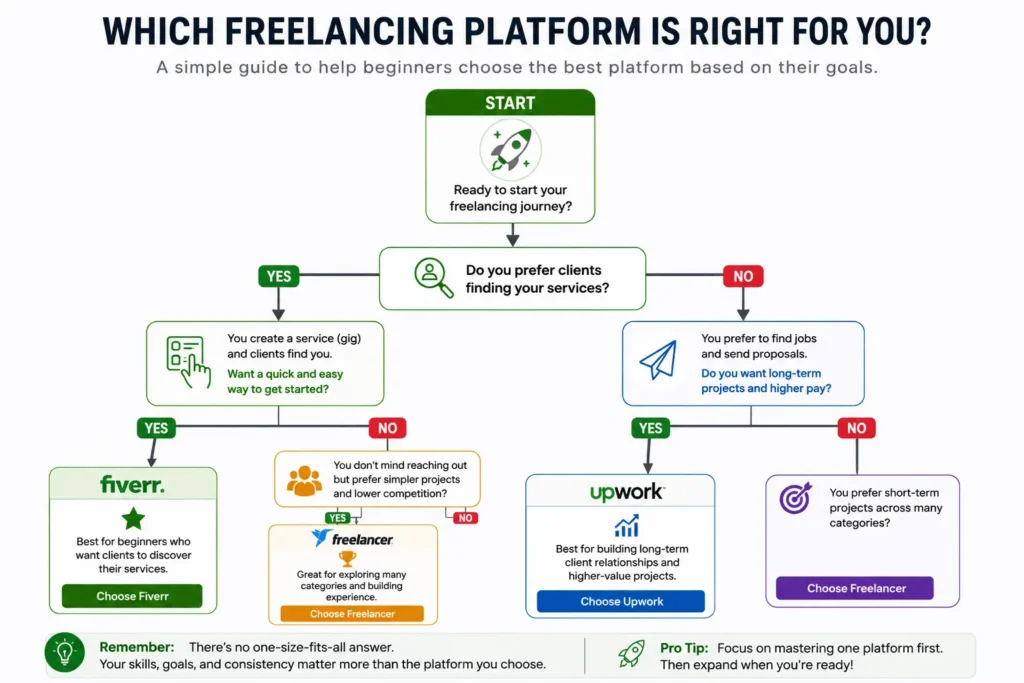
DGSoftHub Tip: There isn’t a universally “best” freelancing platform. The best platform is the one you’ll commit to learning consistently for the next few months.
Best Freelancing Platforms for Different Skills
Different platforms work better for different services. Here’s a practical starting point.
| Skill | Recommended Platform | Why It Fits |
| Content Writing | Fiverr or Upwork | Strong demand for blog writing, website copy, and SEO content. |
| Graphic Design | Fiverr | Fixed-price service packages work well for logos, branding, and social media graphics. |
| WordPress Development | Upwork | Many businesses hire developers for ongoing website maintenance and improvements. |
| SEO Services | Upwork | SEO projects often develop into long-term client relationships. |
| Virtual Assistance | Upwork | Businesses frequently look for reliable assistants on a recurring basis. |
| Video Editing | Fiverr | Buyers commonly search for predefined editing services. |
| AI Content & Prompt Writing | Fiverr or Upwork | Growing demand as more businesses adopt AI tools. |
Your first platform doesn’t have to be your last. Many experienced freelancers eventually work across multiple platforms after building confidence and a strong portfolio.
Before You Create Your First Freelancing Profile
A strong profile creates a positive first impression and increases your chances of getting noticed.
Before applying for projects, make sure you’ve completed these basics:
- Use a professional, friendly profile photo.
- Write a clear headline explaining exactly what you do.
- Focus on one or two services instead of trying to offer everything.
- Add portfolio samples that demonstrate your skills.
- Proofread your profile for spelling and grammar.
- Complete every important section before applying for work.
Most beginners skip this step entirely, then wonder why clients don’t respond. Spending an extra hour improving your profile can make a noticeable difference.
Signs You’re Ready to Increase Your Rates
Many freelancers keep charging beginner prices long after they’ve gained experience.
You may be ready to raise your rates if you:
- Receive repeat orders from satisfied clients.
- Consistently earn positive reviews.
- Have more work than you can comfortably manage.
- Complete projects faster without sacrificing quality.
- Have developed a specialized skill that’s in demand.
Increasing your rates gradually is usually more effective than making a large jump overnight.
Freelancing Success Milestones
Building a freelance career takes time, but every milestone moves you closer to your goals.
Milestone 1: Create a Professional Profile
A complete profile helps clients understand who you are and what you offer.
Milestone 2: Land Your First Client
This is often the hardest step, but it proves that your skills have real value.
Milestone 3: Earn Five Positive Reviews
Positive reviews increase trust and make it easier to attract future clients.
Milestone 4: Increase Your Rates
As your skills and reputation grow, adjust your pricing to reflect the value you provide.
Milestone 5: Build Long-Term Client Relationships
Repeat clients provide a more stable income and reduce the need to constantly search for new work.
Free Download: DGSoftHub Freelancing Starter Toolkit
Want to save time and avoid common beginner mistakes?
Download the DGSoftHub Freelancing Starter Toolkit, which includes:
- Fiverr profile optimization checklist
- Upwork proposal template
- Portfolio planning worksheet
- Client communication templates
- Project delivery checklist
- 30-day freelancing roadmap
- Common beginner mistakes checklist
Whether you’re creating your first profile or applying for your first project, these resources will help you start with more confidence and a clearer plan.
Whether you’re starting today or still comparing platforms, these templates can save you hours of trial and error.
Download Free Freelancing Starter Kit
“No spam. Just practical PDF checklists to kickstart your career.”
Frequently Asked Questions About Freelancing Platforms
Which freelancing platform is best for complete beginners?
For most beginners, Fiverr is the easiest place to start because you can create service listings and allow clients to find you. If you’re comfortable writing proposals and want long-term projects, Upwork is another excellent option.
Can I start freelancing without professional experience?
Yes. Many freelancers begin with personal projects, volunteer work, or portfolio samples instead of paid client work. Demonstrating your skills is often more important than having years of experience.
How long does it take to get the first freelance client?
There’s no fixed timeline. Some freelancers receive their first project within a few days, while others may need several weeks of consistent effort. Improving your profile, portfolio, and proposals increases your chances over time.
Should I create accounts on multiple freelancing platforms?
It’s usually better to focus on one platform first. Learning how its search system, client behavior, and ranking process work is more effective than dividing your attention across several marketplaces.
What skills are in demand on freelancing platforms?
Popular services include content writing, graphic design, WordPress development, SEO, video editing, social media management, virtual assistance, and AI-assisted content creation. Demand changes over time, so continuous learning is important.
Do freelancing platforms charge service fees?
Yes. Most platforms deduct a percentage of your earnings to cover payment processing, marketplace services, and client protection. Review each platform’s pricing before accepting projects.
What You Should Do Next
Reading about freelancing is helpful, but taking action is what moves you forward.
Here’s a practical plan to get started:
Choose one freelancing platform that best matches your skills and working style.
Create a complete profile with a professional photo, clear description, and relevant portfolio samples.
Offer one focused service instead of trying to do everything.
Apply consistently by sending thoughtful proposals or improving your Fiverr gig each week.
Keep learning and improving your skills, communication, and portfolio as you gain experience.
Remember, every successful freelancer started with zero reviews and no client history. What set them apart wasn’t luck—it was their willingness to keep learning, improve with every project, and stay consistent.
If you’re serious about building a long-term online career, focus on developing valuable skills first. The clients and income usually follow.
About the Author
Muhammad Arif Hussain is the founder of DGSoftHub, where he publishes practical, beginner-friendly guides on digital marketing, SEO, blogging, freelancing, AI tools, and online business growth.
His mission is to simplify complex topics through clear explanations, real-world examples, and actionable advice that readers can apply with confidence. Every guide on DGSoftHub is written with a reader-first approach, helping beginners build valuable digital skills without relying on hype or unrealistic promises. Whether you’re building your first freelance profile or growing an online business, DGSoftHub is here to help you learn practical digital skills—one step at a time.


[…] more on this blog […]
[…] Freelancing […]
[…] Best Freelancing Platforms for Beginners […]
[…] Best Freelancing Platforms for Beginners in 2026 […]
[…] Freelancing […]
[…] Complete Guide: Best Freelancing Platforms […]